
Commercial Design for Luxury Restaurants: How to Create Spaces that Attract and Retain Customers
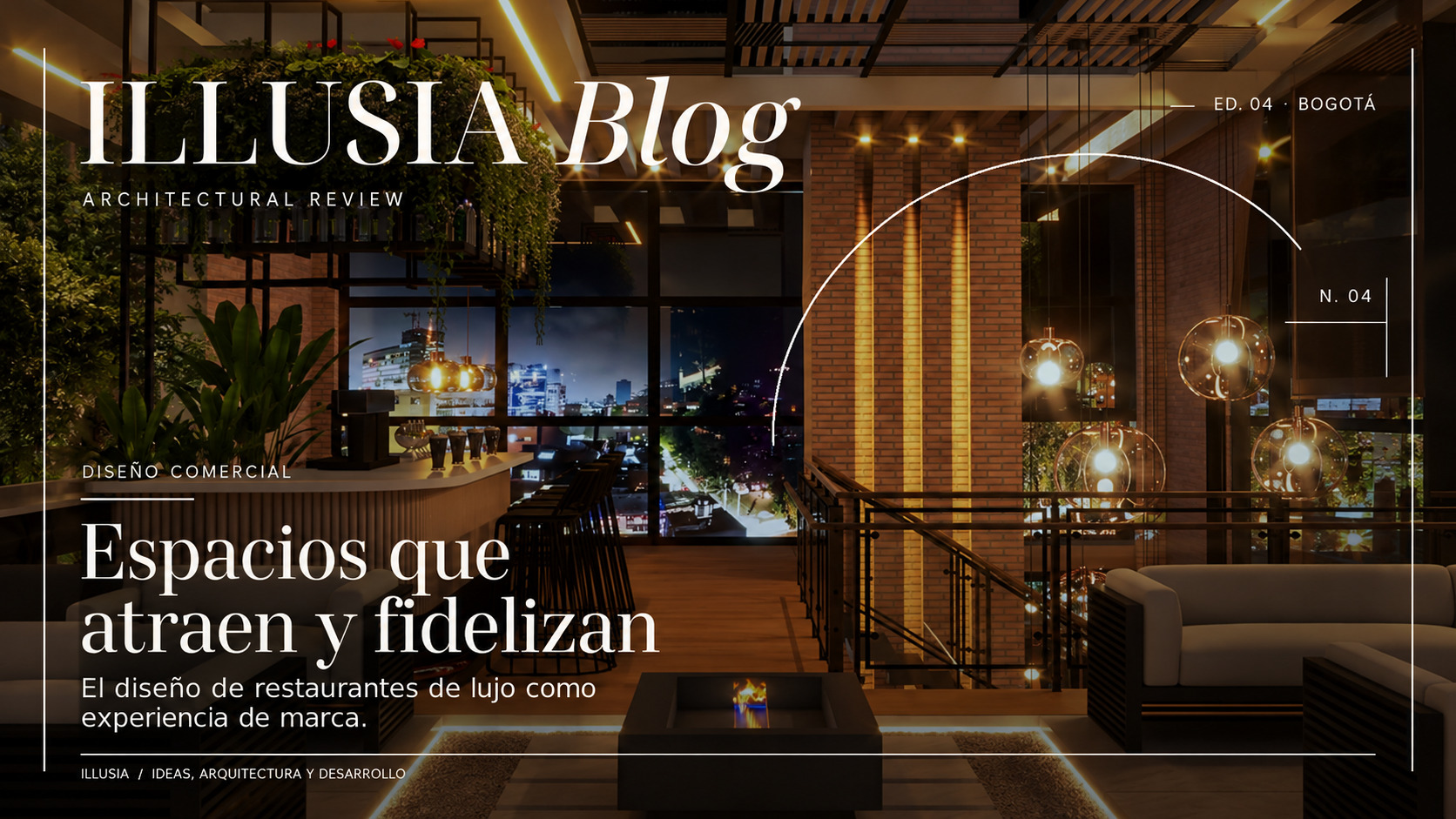
Interior design in luxury restaurants plays a fundamental role in the customer experience. Research in hospitality management shows that design directly affects customer perception, influencing willingness to spend more and return. It is not just about tables and chairs; it is about creating an environment that reinforces the culinary concept, the brand and ultimately customer loyalty.
In Colombia, where the dining sector has expanded significantly in cities such as Bogotá, Medellín and Cartagena, luxury restaurants increasingly use design as a tool for differentiation. A carefully designed space attracts demanding customers and also strengthens word of mouth and visibility on platforms such as Instagram and Google Reviews.
Key Elements in Restaurant Design that Attract Customers
Strategic Lighting
Lighting is one of the most underestimated elements in restaurant design, yet its impact is undeniable. Research from the Lighting Research Center has shown that lighting can influence guest behavior, from how long diners stay to how much they consume. In luxury restaurants, lighting is essential to creating an intimate, elegant and attractive atmosphere.
In Bogotá, restaurants such as Harry Sasson and El Cielo combine warm indirect light with accent lighting to highlight architectural or decorative elements, encouraging guests to stay longer and enjoy the experience. Strategic lighting also enhances food presentation, material textures and the colors used throughout the space.
Materials and Textures that Express Exclusivity
Materials and textures are fundamental to communicating exclusivity and luxury. Noble materials such as marble, exotic wood and high-end textiles improve the visual quality of the space and convey sophistication.
ArchDaily has highlighted the use of natural, durable materials as both a global luxury-design trend and a way to communicate values such as sustainability and permanence. In Colombia, high-end restaurants increasingly incorporate local materials including coral stone and native woods, strengthening a sense of place and connection to context.
Luxury restaurants in Medellín, such as Carmen Restaurante, have created distinctive atmospheres by incorporating natural elements that reinforce their culinary concepts and celebrate Colombia's biodiversity.
Space Planning and Flow
Space planning in a luxury restaurant must allow diners, staff and kitchen operations to move efficiently without compromising the customer experience. Distinct areas such as private dining rooms, terraces and bars help a restaurant accommodate different occasions, from intimate dinners to corporate events.
In destinations such as Cartagena and Medellín, thoughtful planning improves customer experience and maximizes the use of available space. Restaurants that offer both intimate zones and more open areas can adapt more effectively to changing customer and event needs.
Design and Profitability: How Good Design Increases Sales
Good design not only attracts customers; it can directly affect profitability. Research from Cornell University's School of Hotel Administration has shown that an appropriate environment can improve perceived value and customer experience, supporting stronger sales.
In Colombia's increasingly competitive dining sector, luxury restaurants that invest in design are seeing stronger returns. Customer experience is a key differentiator, and coherent, memorable environments help generate loyalty, repeat visits and recommendations.
Well-executed design also helps restaurants stand out on social media and reach broader audiences. Visually striking venues in destinations such as Cartagena can gain international visibility through travel and review platforms.
Successful Restaurant Design Examples in Colombia
El Cielo — Bogotá and Medellín
El Cielo, with locations in Bogotá and Medellín, demonstrates how design can complement a high-level culinary experience. Founded by chef Juan Manuel Barrientos, the restaurant is known not only for innovative cuisine but also for the careful integration of design and gastronomy. A focus on nature and sustainability is expressed through local and natural materials aligned with the menu, creating a fully immersive experience.
Soft lighting, high-end furniture and contemporary architectural detailing turn El Cielo into a place where design and dining work together to attract a discerning, loyal clientele.
Carmen Restaurante — Medellín
Carmen Restaurante is another example of elegant design supporting a modern culinary proposition. Located in Medellín, Carmen uses its natural surroundings through vertical gardens and local materials that reference Colombia's biodiversity. The design creates a welcoming, luxurious atmosphere while reinforcing sustainability, a value increasingly appreciated by luxury customers.
Carmen attracts both local guests and international visitors through an environment that encourages relaxation and supports a first-class dining experience.
Conclusion
Interior design is an essential component in the success of a luxury restaurant. It helps attract and retain customers and can directly influence profitability. Across Bogotá, Medellín and Cartagena, high-end restaurants are using design as a strategic tool to improve experience and differentiate themselves in a competitive market.
By creating spaces that are visually memorable and operationally functional, these restaurants provide more than excellent food: they create experiences that encourage guests to return and share what they experienced, both in person and online.