
Luxury Bar and Restaurant Design Trends: What Will Attract Exclusive Clientele in 2025
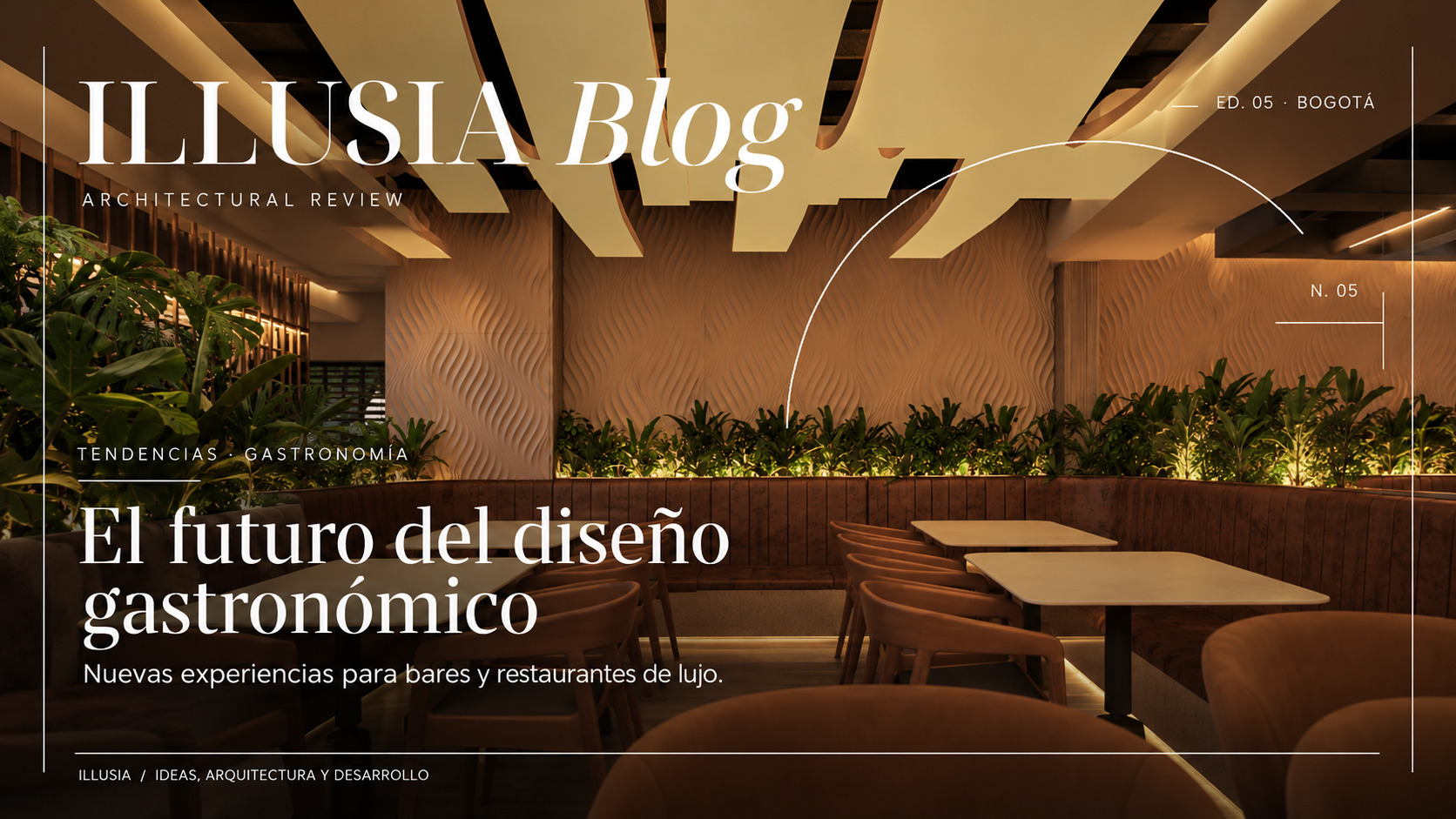
The Evolution of Luxury Restaurant Design
Luxury bar and restaurant design has evolved from a matter of decoration into an integral part of the customer experience. In the past, high-end restaurants often focused on opulent interiors, but new generations want more than a visually impressive atmosphere: they seek a complete sensory experience.
Today, architecture and interior design help distinguish luxury venues from competitors by expressing brand identity, the history of a place and the exclusivity of the offer. In cities such as Bogotá and Medellín, where the dining sector is growing quickly, luxury restaurants and bars increasingly invest in design as a strategic way to attract demanding clientele.
Key Design Trends for 2025
Sustainability and Eco-Friendly Materials
In 2025, sustainability will remain one of the central trends in luxury hospitality design. Modern consumers are increasingly aware of environmental impact and look for experiences that reflect those values. Recycled materials, energy efficiency and the integration of natural elements will continue to grow in importance.
The Global Wellness Institute has shown strong preference among luxury consumers for businesses that demonstrate sustainability. Colombia's natural-resource diversity allows luxury restaurants to work with natural stone, certified woods and native vegetation in spaces that are visually compelling and environmentally responsible.
In Medellín, restaurants such as Oci.Mde have already adopted local materials and energy-efficient systems that reduce environmental impact while strengthening the connection between guests and nature.
Immersive Technology
Technology is redefining luxury environments, and its role will continue to deepen. Interactive screens, visual projections and AI-controlled lighting can create immersive and personalized dining experiences.
Ultraviolet in Shanghai, where each course is accompanied by a distinct audiovisual environment, is a clear example. In Colombia, immersive technology could enrich customer experience in destinations such as Cartagena, using projection and sound to create themed dinners connected to local culture.
Personalized Experiences
Exclusivity is no longer defined only by price or ingredient quality. Luxury customers increasingly expect deeply personalized experiences, from unique menus to private spaces configured for select groups.
Customization in spatial design will also matter. Restaurants with modular areas that adapt from an intimate dinner to a corporate event will have a competitive advantage. In Colombia, high-level restaurants in cities such as Bogotá can use flexible spaces to respond to different occasions and guest expectations.
Multifunctional Spaces
Luxury bars and restaurants are becoming more than places to eat and drink. Multifunctional concepts combine lounge areas, private-event spaces and even coworking environments, blending luxury with practicality.
In Medellín, venues such as Salvaje illustrate how dining can be combined with entertainment and private events. Integrating functions can increase customer loyalty, optimize space use and strengthen profitability.
International Examples and Their Application in Colombia
Restaurants in New York, Paris and Tokyo
New York, Paris and Tokyo remain global references for luxury hospitality design. Their best venues combine innovative design with gastronomy to create distinctive experiences.
Eleven Madison Park in New York reinforces its culinary identity through minimalist, elegant interiors. Paris has long used lighting and noble materials to create intimate luxury, including venues such as Le Jules Verne in the Eiffel Tower.
In Tokyo, technology is central to the dining experience. Restaurants such as Narisawa combine traditional Japanese aesthetics with modern innovation, creating experiences that connect past and present. These approaches are increasingly relevant to Colombia as its hospitality industry incorporates global design ideas for international visitors and demanding local customers.
The Colombian Case: La Candelaria in Bogotá and El Poblado in Medellín
Colombia is also developing luxury bars and restaurants that combine high-level cuisine with design as a tool for attracting exclusive clientele.
In neighborhoods such as La Candelaria and El Poblado, hospitality projects combine historic and contemporary elements, preserving local cultural character while creating environments where past and present meet.
Restaurants such as Andrés Carne de Res and Harry Sasson show how design can improve customer experience and strengthen loyalty by creating immersive, personalized atmospheres that make each visit memorable.
Conclusion
Luxury bar and restaurant design in 2025 is shaped by sustainability, immersive technology and personalization. In an increasingly competitive market, venues that integrate these trends will appeal to customers seeking more than excellent food; they are looking for a complete sensory experience.
In Colombia, luxury restaurants that adopt global trends while adapting them to local context will be better positioned to stand out and build loyalty among national and international customers. As the industry evolves, design will remain one of the most powerful tools for differentiation and long-term success.