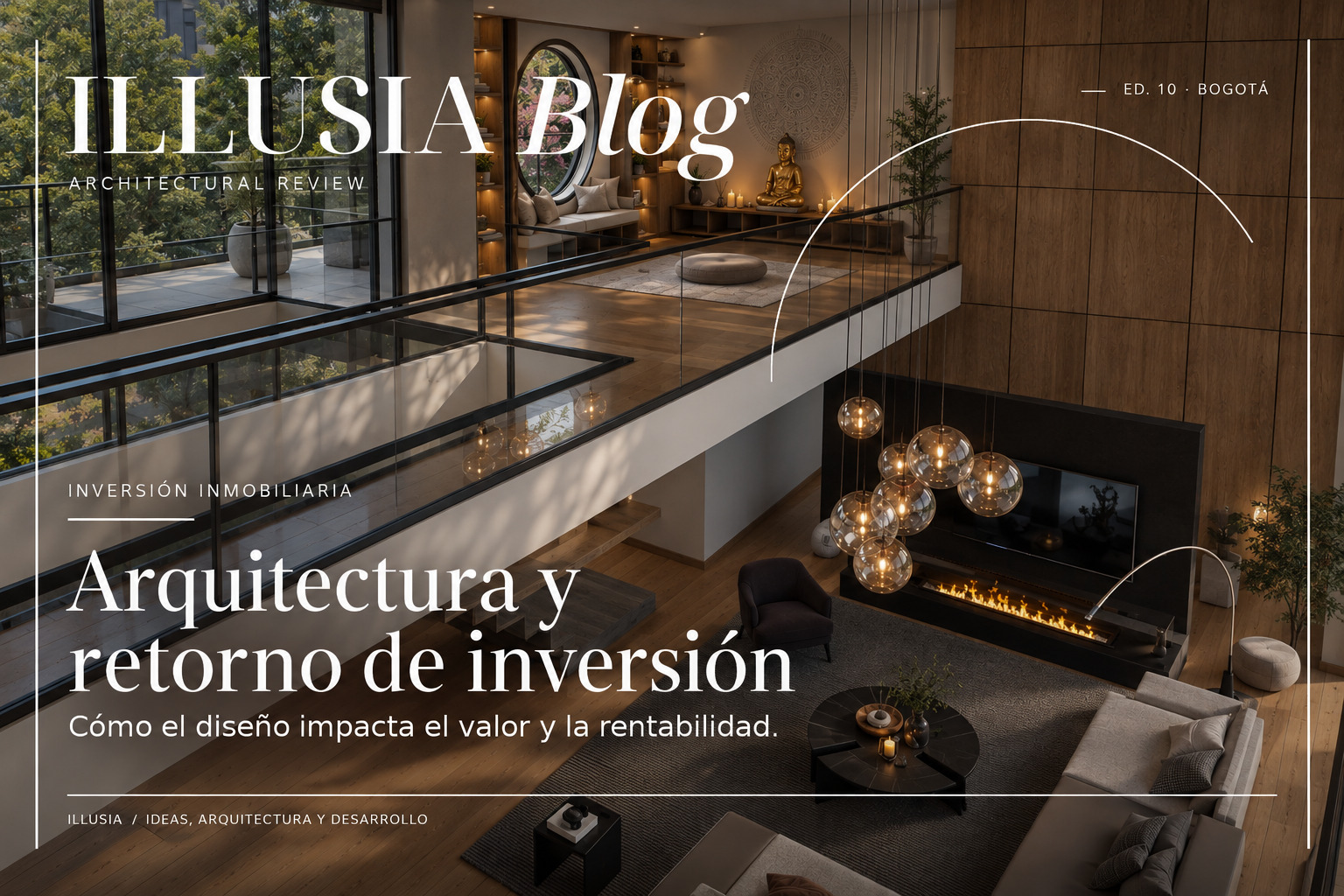
Return on Investment in Exclusive Real Estate Projects: How Design Impacts Profitability
Introduction: The Power of Design in Luxury Real Estate
Over the last decade, luxury real estate has undergone a significant transformation. Knight Frank has identified design as one of the most important factors for high-value property buyers, second only to location. This shift has led sophisticated developers to treat design not simply as an aesthetic layer but as a strategic tool for maximizing return on investment.
Design in exclusive real estate projects goes beyond appearance. It is about creating experiences, meeting needs and exceeding expectations. Research by PwC has indicated that luxury projects with a strong focus on innovative design can achieve higher sales values per square meter than comparable properties in the same area.
The Psychology of the Premium Buyer: Understanding Expectations
To maximize ROI through design, it is critical to understand the luxury buyer. Luxury Portfolio International has reported that buyers of high-value properties are willing to pay a premium for design that reflects their values and lifestyle.
Premium buyers look for:
Exclusivity and originality. Functionality without sacrificing aesthetics. Integration of advanced technology. Spaces that support wellbeing.
Design should generate emotion and personal connection. Luxury buyers are not only purchasing real estate; they are often buying an extension of identity and status.
Space Optimization: Maximizing Value per Square Meter
Space optimization is fundamental to stronger ROI. CBRE has shown that highly optimized luxury projects can generate substantially more income per square meter than conventional alternatives.
Optimization strategies:
Modular and flexible design. Intelligent use of vertical space. Multifunctional environments. Integrated storage.
As architect Daniel Libeskind has noted, every centimeter matters; true luxury is defined by how a space makes you feel, not simply by its size.
Sustainability and Technology: Pillars of Modern Design
Sustainability and technological integration are two factors that can have a significant impact on ROI in exclusive real estate.
Studies by the U.S. Green Building Council have associated LEED-certified luxury properties with price premiums, while Savills has reported that homes with advanced automation systems can sell faster than properties without them.
Key elements:
Renewable-energy systems. Sustainable and locally sourced materials. Home automation. Advanced security systems.
As Bjarke Ingels has argued, sustainability is not a trend but a necessity, and future design should treat it as a default condition.
The Impact of Design on Sales Velocity
Exceptional design can increase sale value and shorten the time needed to sell a property, improving ROI by reducing holding and financing costs.
Analysis from Sotheby's International Realty has shown that luxury properties with distinctive, well-executed design can sell materially faster than average within their segment.
Factors that accelerate sales:
Distinctive and memorable design. Highly photogenic spaces. Common areas that foster community. High-quality finishes and materials.
Success Stories: Global Projects that Redefined ROI
One Central Park — Sydney, Australia
Designed by Jean Nouvel, One Central Park changed the perception of green high-rise design in Australia. Its planted facade and heliostat system made it an architectural icon and a commercial success, achieving a significant premium over average prices in the area.
520 West 28th Street — New York, USA
Zaha Hadid Architects' project in Chelsea demonstrates how bold design can transform ROI. Its curved facade and futuristic interiors attracted high-profile buyers and achieved sales values above initial projections.
Bosco Verticale — Milan, Italy
Stefano Boeri's vertical forest redefined sustainable residential architecture while demonstrating economic viability. RICS research has shown that units in Bosco Verticale achieved meaningfully higher values than comparable properties nearby.
Strategies for Implementing ROI-Oriented Design
To maximize ROI through design, developers should:
Invest in market research: understand the preferences and needs of the target market.
Prioritize flexibility: design adaptable spaces that can evolve with residents' needs.
Integrate technology from the beginning: plan technological infrastructure early so it becomes part of the architecture rather than an afterthought.
Focus on user experience: create spaces that are not only beautiful but improve daily life.
Consider the full life cycle: design for long-term sustainability and operating performance.
Architecture should be understood beyond the visual dimension; its impact reaches experience, operations, value and long-term performance.
Conclusion: Design as a Catalyst for Financial Success
Design in exclusive real estate has evolved from a purely aesthetic attribute into a powerful driver of profitability. Developers that recognize the value of innovative design are better positioned to capture market share and generate stronger returns.
A holistic approach integrating aesthetics, functionality, sustainability and technology not only responds to demanding buyers but creates durable value that can translate into higher ROI.
In an increasingly competitive market, design is the differentiator that can move a project from ordinary to exceptional — both in user experience and financial performance. Developers that adopt this approach with discipline and precision will be better positioned to lead the next generation of luxury real estate projects.